Originally published September 12, 2024. Updated May 29, 2026.
If your flail mower, ditch bank mower, side-shift mower, or other tractor implement moves too fast when you touch the hydraulic remote, the issue is usually not that the implement is defective. In many cases, the tractor is simply sending more hydraulic flow than the cylinder movement needs.
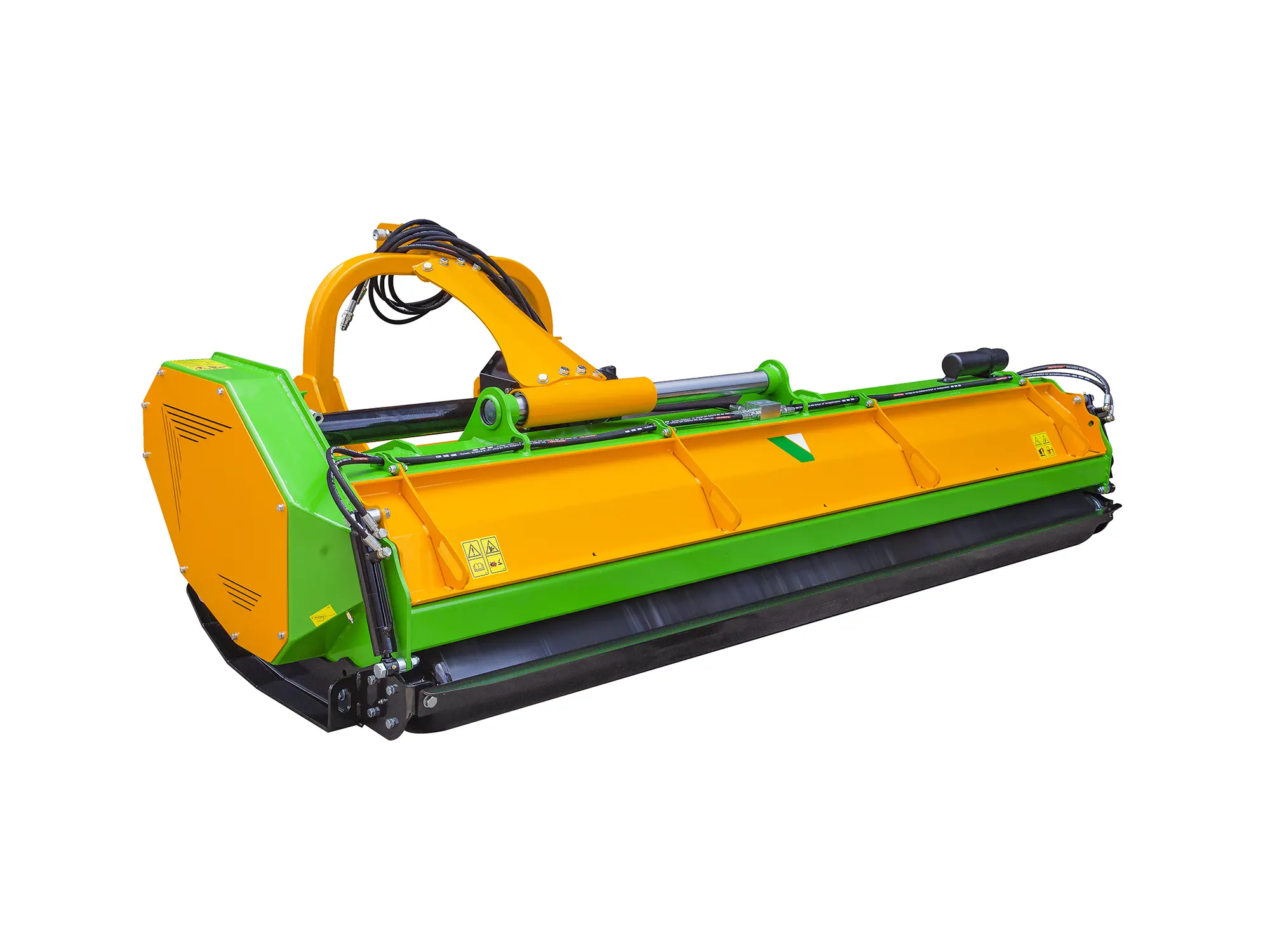
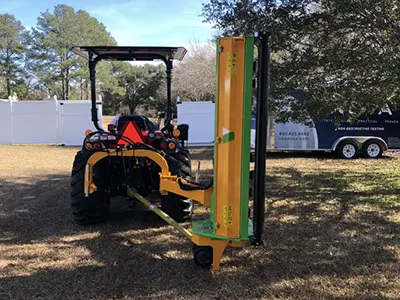
That can make the mower swing, tilt, or shift abruptly instead of moving smoothly. On a ditch bank flail mower especially, fast hydraulic movement can make small adjustments difficult and can make the mower feel jumpy when working along slopes, embankments, fence lines, and uneven ground.
One simple way to slow that movement down is to install an inline hydraulic flow restrictor between the hydraulic hose end and the quick coupler that plugs into the tractor. For compatible 1/2″ BSPP hydraulic connections, Victory Tractor Implements now recommends checking out SlamFix: 1/2″ BSPP (G1/2) Inline Hydraulic Flow Restrictor from Inline Hydraulics.
This guide explains what the restrictor does, where it installs, why fitment matters, and how to think through installation before ordering or making changes to your hydraulic setup.
| Topic | Inline Hydraulic Flow Restrictors for Flail Mowers |
|---|---|
| Purpose | To slow fast hydraulic movement for smoother, more controlled implement adjustment |
| Common Uses | Ditch bank flail mower angle control, side-shift flail mower movement, hydraulic top links, hydraulic side links, grapples, and other tractor implement hydraulic functions |
| Recommended Product | SlamFix: 1/2″ BSPP (G1/2) Inline Hydraulic Flow Restrictor |
| Thread Type | For compatible 1/2″ BSPP (G1/2) parallel hydraulic thread connections |
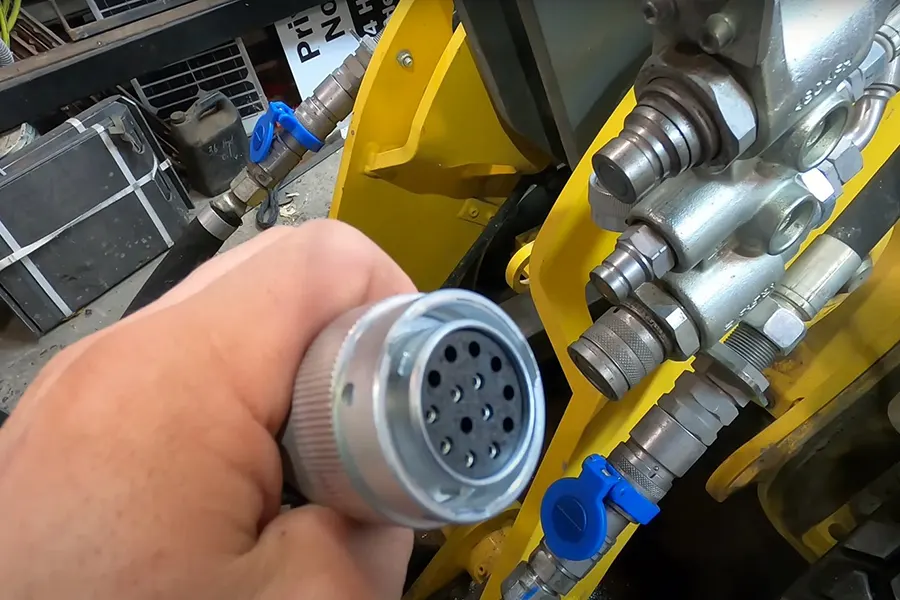
| Install Point | Inline between the hydraulic hose end and the hydraulic quick coupler that plugs into the tractor |
| Important Fitment Note | The quick coupler body size alone does not confirm thread type. You must verify the actual threaded hose-to-coupler connection. |
| Related Video | A video demonstration showing the before-and-after effect of slowing down hydraulic movement |
Victory Flail Mower Compatibility Tool – Which Mower Will Fit Your Tractor?
Why Fast Hydraulic Movement Happens
Many compact and utility tractors have rear hydraulic remotes that are designed to run a wide range of attachments. That hydraulic flow may be fine for one implement but too much for another.
On a ditch bank flail mower, side-shift flail mower, or other hydraulic implement, this can show up as movement that feels too quick, too abrupt, or hard to feather. Instead of gently easing the mower head into position, a small movement of the tractor’s hydraulic lever may cause the cylinder to move too aggressively.
This is especially noticeable on functions like:
- Tilting a ditch bank mower up or down
- Swinging a mower head out to the side
- Moving a side-shift mower left or right
- Adjusting a hydraulic top link or side link
- Feathering a grapple, blade, rake, or other hydraulic attachment
The implement may work correctly, but the hydraulic movement is simply faster than the operator wants.
What an Inline Hydraulic Flow Restrictor Does
An inline hydraulic flow restrictor reduces how quickly hydraulic oil can pass through the fitting. By restricting flow, the connected cylinder moves more slowly. That gives the operator more time to make small adjustments and helps reduce the sudden “jump” that can happen when a hydraulic function reacts too quickly.
It is important to understand what a restrictor is and what it is not. A flow restrictor slows movement by reducing flow. It is not a pressure relief valve, and it should not be used as a pressure-control or safety relief device.
For the common fast-movement issue found on many imported tractor implements, a fixed-orifice inline restrictor can be a simple and effective solution when the thread type and installation point are correct.
Recommended Restrictor for Compatible 1/2″ BSPP Connections
For compatible hose-to-coupler connections, we recommend reviewing SlamFix: 1/2″ BSPP (G1/2) Inline Hydraulic Flow Restrictor from Inline Hydraulics.
SlamFix is a compact .030″ fixed-orifice flow restrictor designed for compatible 1/2″ BSPP (G1/2) hydraulic connections. It installs inline between the hydraulic hose end and the hydraulic quick coupler that plugs into the tractor.
This installation point matters. The restrictor is not selected by the size of the coupler body alone. It is selected by the threaded connection between the hose end and the coupler.
Fitment reminder: 1/2″ BSPP (G1/2) is a parallel hydraulic thread. It is not the same as NPT, JIC, SAE ORB, metric thread, or the outside body size of the quick coupler.
Before ordering, confirm the actual thread type, thread size, sealing style, and available clearance at the hose-to-coupler connection.
Where the Restrictor Installs
On a compatible setup, the restrictor typically installs inline between the hydraulic hose end and the hydraulic quick coupler that plugs into the tractor. In other words, it sits at the hose-to-coupler connection, not directly on the cylinder.
The general stack-up is:
- Hydraulic hose end
- Inline flow restrictor
- Hydraulic quick coupler
- Tractor rear remote
This keeps the restrictor at the tractor-connection end of the hydraulic hose, where it is easy to access, inspect, and remove if needed.
Before You Install Anything: Confirm Fitment
Do not assume that a restrictor will fit just because the coupler looks like a common 1/2″ agricultural coupler. The coupler body size and the thread on the hose side are two different things.
The threaded connection between the hydraulic hose end and the quick coupler may be BSPP, NPT, JIC, ORB, metric, or another style. Forcing the wrong thread type together can damage the fittings, create leaks, or create an unsafe hydraulic connection.
Before ordering a restrictor, check the following:
- The thread type on the hose-to-coupler connection
- The thread size
- The sealing style, such as bonded washer, O-ring, flare, taper, or other seal type
- The available space between the hose end and coupler
- Whether the restrictor will have enough clearance when plugged into the tractor
If you are not sure what you have, use the fitment information on InlineHydraulics.com and provide clear photos of the hose end, quick coupler, threads, and sealing surface before ordering.
What You’ll Need
The exact tools and supplies can vary depending on your tractor and implement, but a typical install may require:
- Compatible inline flow restrictor: For verified 1/2″ BSPP (G1/2) hose-to-coupler connections, review SlamFix from Inline Hydraulics.
- Correct-size wrenches: Use the proper wrench sizes for the hose end, restrictor, and quick coupler.
- Clean rags or absorbent pads: Some hydraulic fluid may escape when disconnecting fittings.
- Hydraulic fluid: Have the correct fluid available in case the tractor needs to be topped off after installation.
- Thread sealant only if appropriate: Not all hydraulic fittings seal on the threads. Many BSPP hydraulic connections seal with a bonded washer or other sealing face. Do not apply thread sealant blindly if the fitting seals another way.
Step 1: Park Safely and Relieve Hydraulic Pressure
Park the tractor and implement on level ground, lower the implement safely, shut the tractor off, set the parking brake, and relieve hydraulic pressure according to your tractor’s instructions.
In many cases, this means moving the hydraulic remote lever back and forth after the tractor is off to relieve trapped pressure. Follow your tractor manual and do not disconnect hydraulic fittings while the system is under pressure.
Step 2: Disconnect the Hydraulic Hose from the Quick Coupler
Once pressure has been relieved, disconnect the hydraulic hose end from the quick coupler at the connection where the restrictor will be installed. Keep the area as clean as possible. Dirt and debris should not be allowed into the hydraulic system.
Expect a small amount of hydraulic fluid to drain from the connection. Use clean rags or absorbent pads and avoid getting dirt on the open fitting ends.
Step 3: Install the Inline Restrictor
Install the restrictor between the hydraulic hose end and the quick coupler. Make sure the fittings are started by hand and threaded smoothly before tightening. If the fitting does not thread together easily, stop and confirm that the thread type is correct.
Do not force mismatched threads together. BSPP, NPT, JIC, ORB, and metric hydraulic fittings are not interchangeable simply because they appear similar at a glance.
Once everything is correctly aligned, tighten the connection securely using the correct tools. Avoid over-tightening, especially where a bonded washer or sealing face is being used.
Step 4: Reconnect the Coupler to the Tractor
After the restrictor is installed between the hose end and quick coupler, reconnect the coupler to the tractor rear remote. Make sure the coupler seats fully and that the hose has enough clearance to move without rubbing, binding, or placing stress on the fitting.
Check that the added length of the restrictor does not cause interference with the tractor, coupler bracket, PTO shield, three-point hitch, mower frame, or any moving component.
Step 5: Test Slowly
Start the tractor and test the hydraulic function slowly at low engine speed. Watch the fitting area closely for leaks. Move the hydraulic function gently and confirm that the cylinder movement is slower and easier to control.
Do not immediately operate at full speed or under heavy load. First confirm that the restrictor is installed correctly, that the movement is predictable, and that there are no leaks at the hose, restrictor, or quick coupler connections.
Step 6: Check Both Directions of Movement
A fixed-orifice restrictor generally restricts flow through the fitting. Depending on the hydraulic circuit and where the restrictor is installed, you should check how the implement behaves in both directions.
For example, on a ditch bank flail mower, you may want the mower to swing outward more slowly for better control. You may also want to confirm whether the return movement is acceptable for your use.
If you need free flow in one direction and restricted flow in the other direction, a different check-style flow control may be required. A simple fixed restrictor is meant to slow flow; it is not the same as an adjustable flow control valve or one-way check valve assembly.
Step 7: Recheck Fluid Level and Inspect for Leaks
After installation and testing, check the tractor’s hydraulic fluid level according to the tractor manufacturer’s instructions. Top off with the correct hydraulic fluid if needed.
Inspect the restrictor and surrounding fittings again after the first few cycles and after the first period of actual use. Look for seepage, loose fittings, rubbing hoses, or any sign that the added fitting length is creating a clearance issue.
Before and After: What to Expect
Before installing a restrictor, fast hydraulic flow can make a mower head tilt, swing, or shift abruptly. That can make small adjustments frustrating, especially when working near ditches, banks, trees, fence lines, or uneven ground.
After installing a properly fitted restrictor, the movement should be slower and easier to feather. The goal is not to make the implement weak or unresponsive. The goal is to make the hydraulic function more controllable.
If the movement becomes too slow for your application, the restriction may be too aggressive, installed in the wrong place for your goal, or not the right type of flow-control solution for that hydraulic circuit.
Is This Only for Flail Mowers?
No. Ditch bank and side-shift flail mowers are common examples because their hydraulic functions can move quickly and visibly, but the same general problem can happen on other tractor implement hydraulics.
A compatible inline restrictor may also be useful for hydraulic top links, hydraulic side links, grapples, blades, and other attachments where the cylinder movement is too fast. The key requirement is that the hose-to-coupler connection must match the restrictor’s thread type and sealing style.
When Not to Use This Restrictor
Do not use a 1/2″ BSPP (G1/2) inline restrictor if your connection is not 1/2″ BSPP (G1/2). It should not be forced onto NPT, JIC, SAE ORB, metric, or other hydraulic threads.
You should also avoid using a fixed restrictor as a substitute for a pressure relief valve, a repair for a damaged hydraulic system, or a way to mask a mechanical problem with the implement. If a cylinder, hose, valve, or coupler is damaged, leaking, binding, or incorrectly routed, that should be corrected first.
Final Thoughts
Fast hydraulic movement is a common complaint on ditch bank flail mowers, side-shift mowers, and other tractor implements. When the implement works but the movement is too abrupt, an inline flow restrictor can be a simple way to slow things down and improve control.
For compatible 1/2″ BSPP hose-to-coupler hydraulic connections, review SlamFix: 1/2″ BSPP (G1/2) Inline Hydraulic Flow Restrictor from Inline Hydraulics. Before ordering, confirm the actual thread type, thread size, sealing style, and available clearance.
If you are shopping for a flail mower and want help choosing the right model for your tractor, Victory Tractor Implements can help match mower width, weight, PTO horsepower, and hydraulic function to your tractor and property.
FAQ
Why would I add a hydraulic flow restrictor to a flail mower?
You would add a flow restrictor if the mower’s hydraulic functions move too fast or too abruptly. A restrictor reduces hydraulic flow so the cylinder moves more slowly, making functions like tilt, side shift, and reach easier to control.
Where does SlamFix install?
SlamFix installs inline between the hydraulic hose end and the hydraulic quick coupler that plugs into the tractor, assuming that connection is compatible 1/2″ BSPP (G1/2).
Is 1/2″ BSPP the same as 1/2″ NPT?
No. BSPP is a parallel thread. NPT is a tapered pipe thread. They are not interchangeable and should not be forced together.
Can I choose a restrictor based on the quick coupler body size?
No. The quick coupler body size does not confirm the thread type on the hose side. You need to verify the actual threaded connection between the hydraulic hose end and the quick coupler.
Does a flow restrictor reduce hydraulic pressure?
A flow restrictor reduces flow to slow movement. It is not a pressure relief valve and should not be used as a pressure-control or safety relief device.
Will one restrictor work for every tractor implement?
No. The restrictor must match the thread type, thread size, sealing style, and available clearance of the specific hose-to-coupler connection. If the fitting is not compatible, do not install it.
What if I need flow restricted in only one direction?
A fixed-orifice restrictor generally restricts flow through the fitting. If you need free flow in one direction and restricted flow in the other, you may need a different check-style flow control solution.
Disclaimer: The information provided in this blog post is for informational purposes only. Hydraulic systems can be dangerous if modified or serviced incorrectly. Victory Tractor Implements, Inline Hydraulics, and their affiliates, authors, and contributors are not responsible for any damages, injuries, leaks, equipment failures, improper installations, or losses that may result from the application of this information. It is the reader’s responsibility to verify fitment, thread type, thread size, sealing style, clearance, and safe installation practices before making any hydraulic changes. Always follow your tractor and implement manuals and consult a qualified professional if you are unsure.

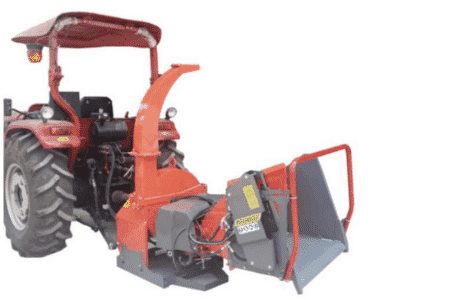
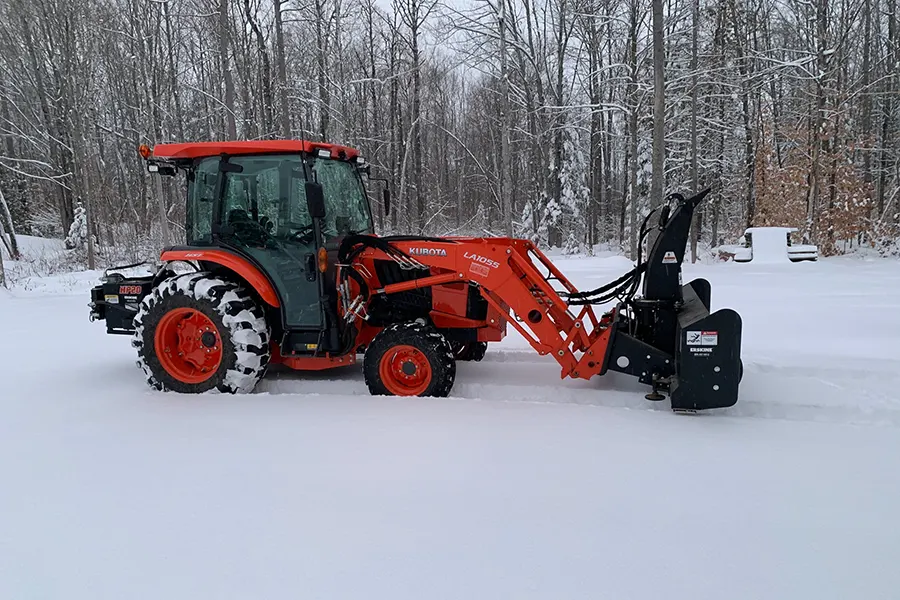
Victory Tractor Implements is proud to offer a wide range of products including flail mowers, wood chippers, rotary tillers, and backhoes. We also offer winter equipment such as snow plows and snow blowers.
For compatible hydraulic flow-control fitment questions related to 1/2″ BSPP (G1/2) hose-to-coupler connections, visit Inline Hydraulics to review SlamFix: 1/2″ BSPP (G1/2) Inline Hydraulic Flow Restrictor.
As always, the Victory Tractor Implements team is standing by to answer equipment questions and assist with your decision. Victory support can be reached directly at (562) 534-8182 or sales@etractorimplements.com.